
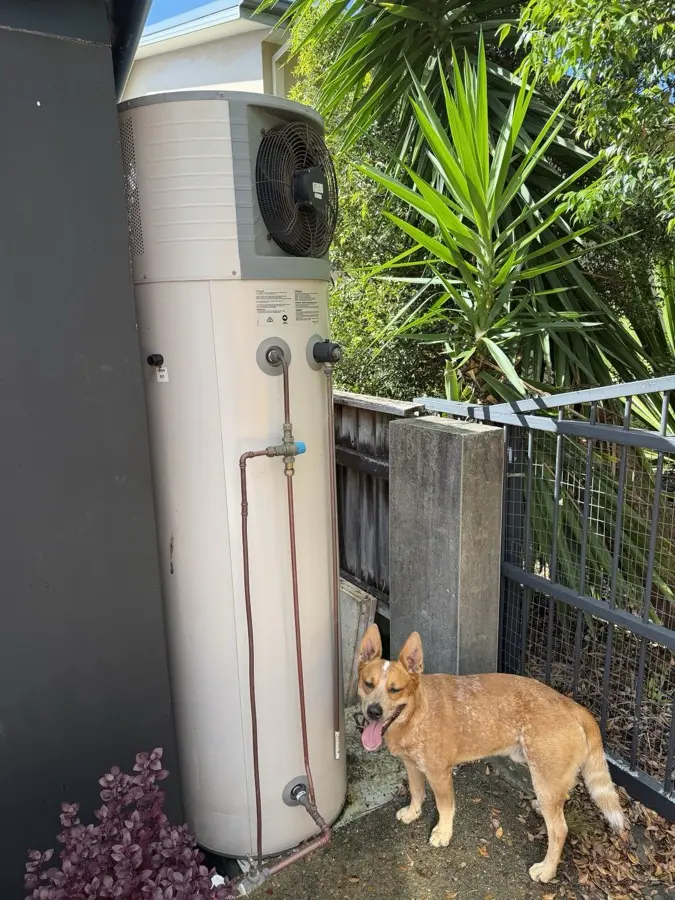
Saturday morning, phone rings. Family in Elanora Heights — no hot water since Friday night. They’ve got a 6-year-old Rinnai heat pump and it’s completely dead. No lights on the controller, no fan spinning, nothing.
With the weekend ahead and no hot water, waiting until Monday wasn’t really an option. We headed out within the hour.
What We Found
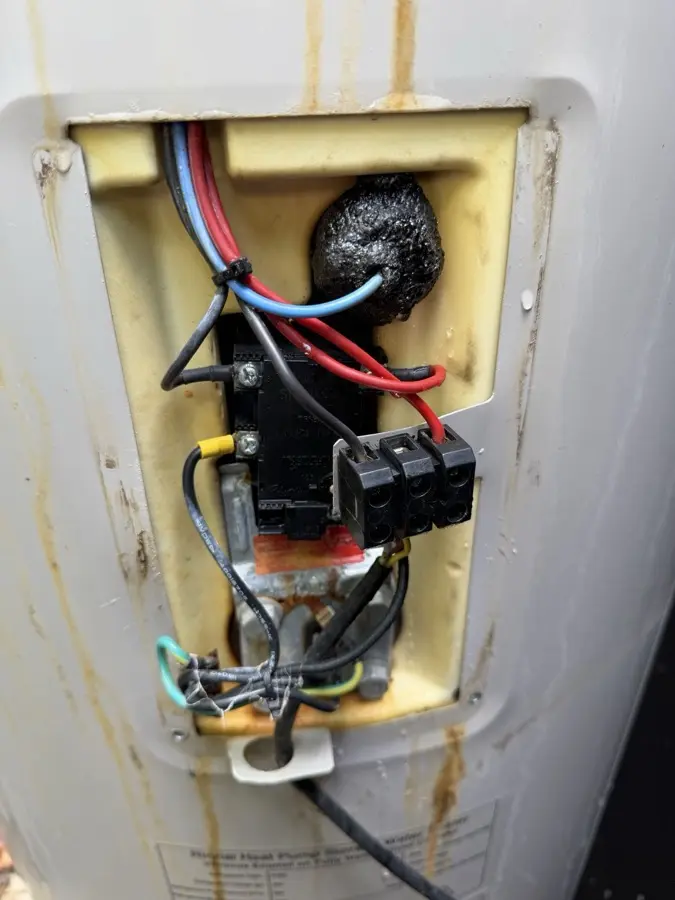
Once we opened up the electrical compartment, the cause was clear. There was a leak on one of the connections in the condenser unit. Water had been running down over the electrical connections, causing the system to trip out and shut down completely.
The wiring and electrical components had visible water damage and were showing their age. When water gets into the electrics like this, the safety switch does exactly what it’s supposed to do — it cuts the power. But until you find and fix the source of the leak, the unit won’t stay running.
The Fix
We repaired the leak in the condenser, dried out the electrical compartment, checked all the wiring connections for damage, and resealed everything properly.
Once everything was back together, the system fired up and was heating water again. Total time on site: about an hour and a half. The unit itself is in reasonable condition for its age — this was a repair job, not a replacement.
When to Repair vs Replace a Heat Pump
A common question we get: is it worth repairing, or should I just replace the whole thing? For a 6-year-old system, repair is almost always the right call. The expensive parts — the compressor and tank — tend to outlast the smaller components.
It also depends on the model. We’ve been doing this long enough to know which models stand the test of time versus which ones are going to need constant repairs. Some brands build units that run for 12–15 years with minimal issues. Others start giving trouble at the 3–6 year mark. There are some models that we recommend removing even as young as 6–7 years old. That experience matters when we’re advising you on whether to repair or replace.
- Under 8 years old with a minor fault — repair it. Leaks, electrical issues, and controller faults are usually straightforward fixes
- 8–12 years old with a major fault (compressor failure, tank leak) — get a quote for both repair and replacement, then compare
- Over 12 years old or needing its second major repair — usually makes more sense to replace with a new system and get the full warranty
- Any age with a leaking tank — replacement. You can’t fix a corroded tank
- Known problem model — sometimes replacing sooner saves you money in the long run rather than chasing one repair after another
Preventing Problems Before They Start
If your heat pump sits outdoors (and most do), a yearly check is worth doing. Look for rust staining around the panel edges, check for any signs of leaks around the condenser connections, and make sure condensate is draining away properly. These are the things that lead to bigger problems if they go unchecked.
Follow the servicing schedule for your exact model and water conditions. Ask about any inspection due before winter, rather than applying one annual interval to every system.
Hot water emergency? We do same-day callouts 7 days a week across the Northern Beaches. Call us on 0448 581 325 — we’ll get your hot water back on fast.
Request Emergency Repair