
This is the most common question we get right now: should I stick with gas or switch to a heat pump? With North Sydney Council's gas phase-out in effect since 1 July 2026 and electricity prices dropping, the answer is shifting — but it depends on your situation.
We've been installing both gas and heat pump systems across the Northern Beaches for over 25 years. Here's an honest comparison based on what we actually see on the job — not what the marketing brochures say.
Illustration for three people using the calculator's standard energy assumptions, no PV and AGL Ausgrid/Jemena reference rates checked 10 September 2026. Gas figures include the supply charge once when hot water is the only gas appliance. These are not measured household bills.
This is where heat pumps win decisively. Using current NSW energy prices for a 3–4 person household:
- Heat pump: about $437/year
- Gas continuous flow: about $1,094/year, including supply
- Gas storage: about $1,285/year, including supply
In this illustration the heat-pump difference is about $657/year against gas continuous flow or $848/year against gas storage. The gas supply charge is already included once; adding it again would overstate the saving. Use your own household and gas-account assumptions in the calculator.
Ten years at the same rates and usage would multiply those annual differences by ten. That is not a forecast or payback promise and excludes purchase, installation, maintenance, repairs and any disconnection costs.
Upfront Cost
Gas continuous flow systems are generally cheaper to buy and install. Heat pumps cost more upfront, but the exact price depends on the brand, model, tank size, and site complexity — every install is different, so we always quote on-site rather than guessing.
Federal STCs and the separate NSW Energy Savings Scheme can reduce upfront cost for eligible installations. Confirm the exact model, activity, customer paperwork and agreed discount; certificate changes do not guarantee a fixed future rebate.
What About the Gas Phase-Out?
North Sydney’s adopted DCP provisions discouraging gas connections and appliances took effect on 1 July 2026 for new residential development. City of Sydney has its own staged controls, with outdoor gas water heaters in new residential buildings covered from January 2027. Check the relevant council and application requirements.
If you are building or altering a property, ask your designer or council which adopted controls apply. A Northern Beaches address does not automatically fall under another council’s policy.
Performance — How They Actually Work
Gas continuous flow heats water on demand, within the unit’s rated flow and temperature-rise capacity. It still needs suitable gas supply, installation clearances and servicing. Energy prices can rise or fall.
Heat pumps transfer heat from outdoor air into a tank. Heating time and efficiency change with air and water temperature, the selected model and household demand; a coastal climate does not guarantee peak efficiency all year.
Both technologies need correct sizing. Continuous flow has a maximum flow at the required temperature rise; a storage heat pump has a finite tank and recovery rate. Check likely simultaneous demand rather than promising unlimited supply.
Noise
Gas burners and heat-pump fans/compressors can generate noise. Compare the exact model’s stated rating and test conditions, then assess windows, reflecting walls, ventilation and applicable noise controls. A generic decibel figure does not prove a site complies.
Space Requirements
Gas continuous flow units are compact — they mount on a wall and take up minimal space. That's a real advantage for Manly apartments, Mosman terraces, and other properties where space is tight.
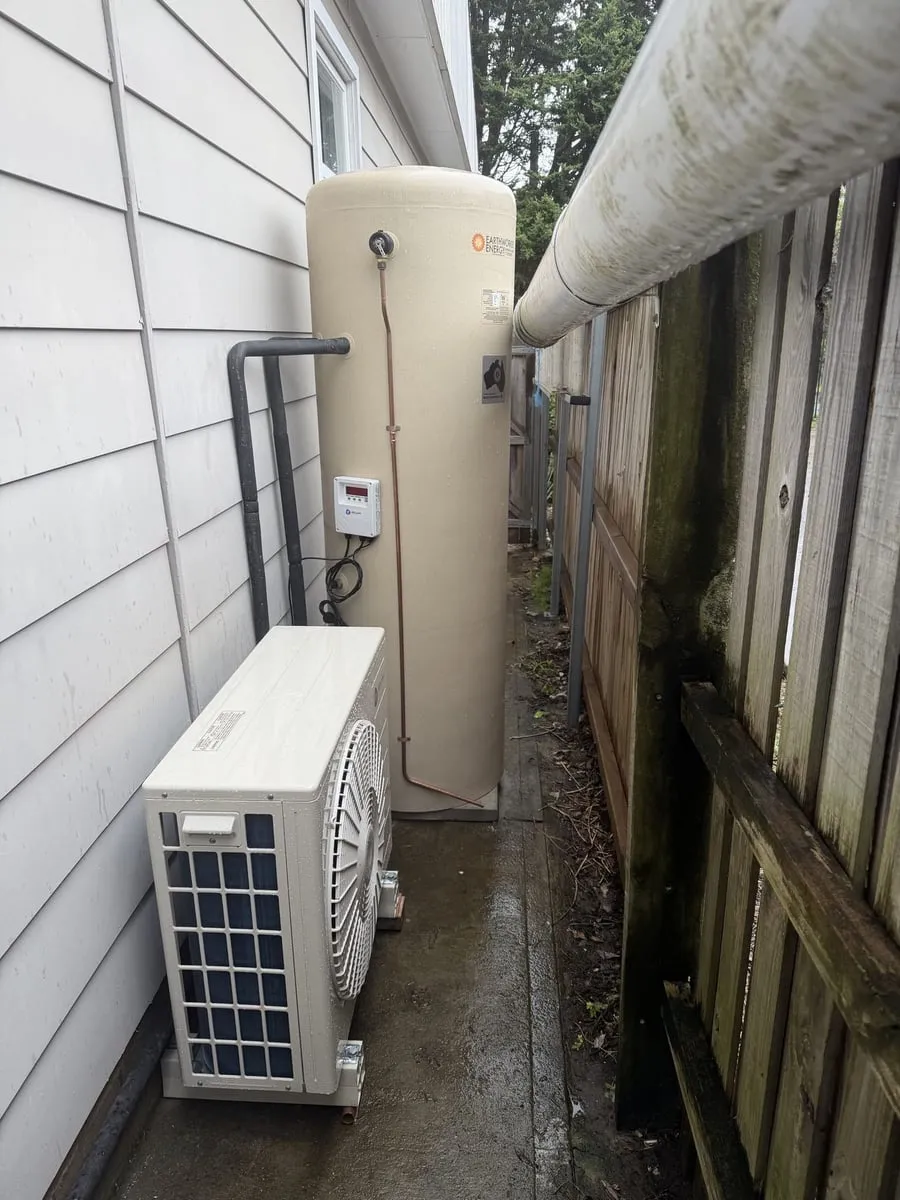
Heat pumps need floor space for the tank (similar to a traditional electric or gas storage system) plus clearance around the outdoor compressor unit. Properties with a side passage, garage, or utility area usually have no issues. Very tight sites can be challenging.
Our Recommendation
A heat pump is worth assessing for many Northern Beaches homes. Compare the site, household demand, tariff and actual on-site quote. Neither a fixed payback period nor immunity from future rule changes can be guaranteed.
Gas continuous flow still makes sense in specific situations: very tight spaces where a tank won't fit, properties with extremely high simultaneous hot water demand, or short-term installations where you won't be in the property long enough to recoup the cost difference.
We install both and we'll give you an honest recommendation based on your actual property and usage — not push whatever has the biggest margin. That's been our approach for 25 years.
Not sure which system is right for your home? We offer free on-site assessments across the Northern Beaches. We'll look at your property, your usage, and your budget and give you an honest recommendation. Call 0448 581 325.
Compare Running Costs